
Race for India’s Next Vice President: Harivansh, Chari, or a surprise pick?
3 min read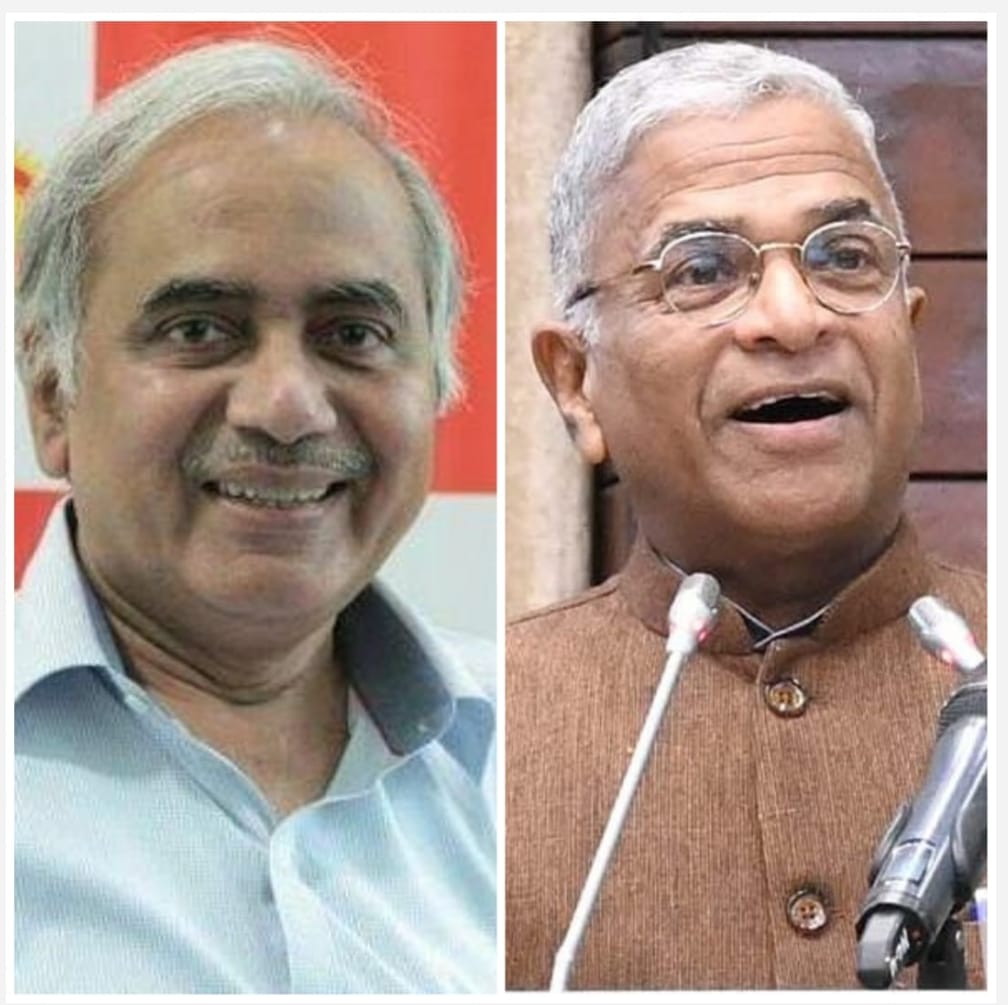
Raveesh Benjamin
As India gears up for the selection of its next Vice President, who also serves as the Chairman of the Rajya Sabha, political circles are abuzz with speculation. The Bharatiya Janata Party (BJP), as the leading force in the National Democratic Alliance (NDA), is at the center of this decision-making process. With the term of the current Vice President, Jagdeep Dhankhar, set to end in August 2027, discussions are intensifying about who will succeed him. Two names have emerged prominently in recent media and political discourse: Harivansh Narayan Singh, the current Deputy Chairman of the Rajya Sabha, and Seshadri Chari, a seasoned Rashtriya Swayamsevak Sangh (RSS) ideologue and former editor of the RSS mouthpiece Organiser. While other names like Rajnath Singh, Nitin Gadkari, and Thawar Chand Gehlot are also being floated, the spotlight is firmly on Harivansh and Chari. The decision, however, is far from straightforward, as it involves balancing regional aspirations, electoral strategies, and ideological loyalties.
Harivansh Narayan Singh, a Rajya Sabha member from Bihar and the current Deputy Chairman, is a frontrunner in the race. His credentials are impressive: a seasoned journalist, former editor of Prabhat Khabar, and a trusted figure in Bihar’s political landscape. Hailing from Sitabdiara, the village of revolutionary leader Jayaprakash Narayan, Harivansh carries a symbolic connection to the socialist movement that once shaped Indian politics. His tenure as media advisor to former Prime Minister Chandrashekhar further bolsters his political pedigree.
However, Harivansh’s journey is not without complications. His association with Prabhat Khabar, owned by the Jhawar family of Usha Martin, has raised eyebrows due to the Enforcement Directorate’s raids on the group, which uncovered Rs 190 crore in a single operation. This scrutiny could pose a challenge to his candidacy, as the BJP may hesitate to elevate someone linked to financial controversies. Moreover, while Harivansh belongs to the Thakur community, a significant vote bank in Bihar, he lacks the grassroots influence to sway elections decisively. His ideological shift from socialism to aligning with the BJP’s ally, Nitish Kumar’s Janata Dal (United), has also drawn criticism. Some view him as a pragmatic operator rather than a charismatic leader with the fire of a Jayaprakash Narayan.
can bridge regional and ideological divides. Harivansh’s experience in the Rajya Sabha makes him a low-risk choice, but his lack of charisma and the Usha Martin controversy could tilt the scales against him. Chari, on the other hand, is gaining traction as a “dark horse” candidate, with some analysts arguing that his South Indian roots and RSS credentials make him an ideal fit for the BJP’s long-term vision. Posts on X also highlight the party’s focus on South India, with one user noting, “BJP is serious about Tamil Nadu in 2026. A figure like Seshadri Chari could be a game-changer.”
The BJP’s decision will also be influenced by its choice for the President of India, as both posts are often decided in tandem to reflect a broader political strategy. Speculation is rife that the party may opt for a North-South combination, with a Vice President from the South (like Chari) and a President from the North (like Khattar or Nadda). This approach could appease regional sentiments while maintaining the BJP’s dominance.