
SCO Summit 2025: India’s balancing act in multi-polar world
2 min read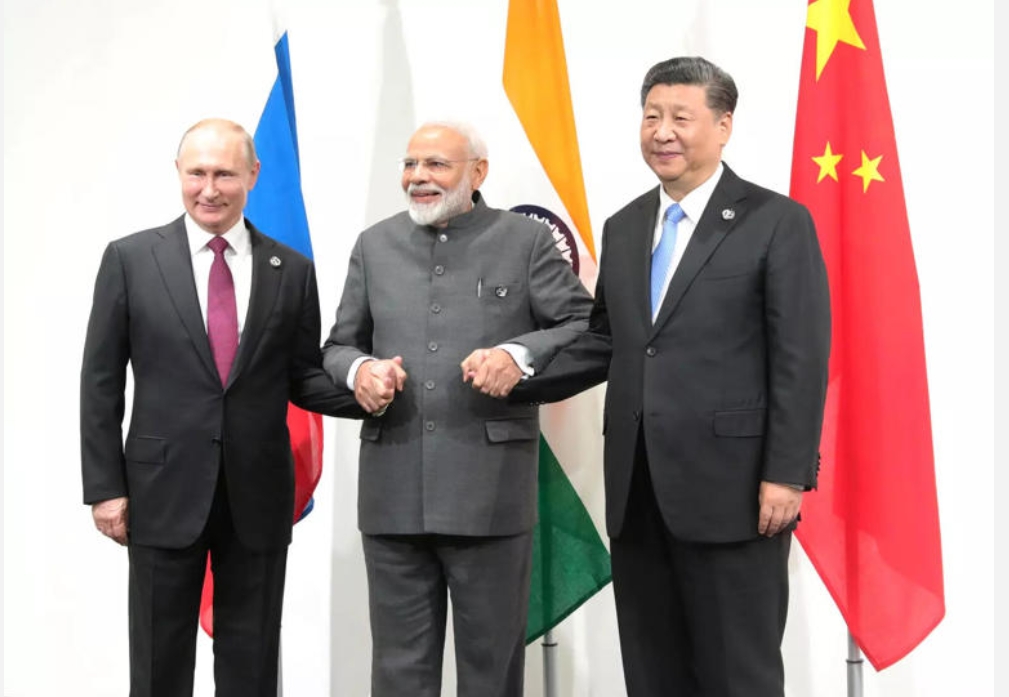
K. K. Jha
The Shanghai Cooperation Organisation (SCO) Summit held in Tianjin, China, from August 31 to September 1, 2025, has thrust India into the spotlight of global diplomacy. Prime Minister Narendra Modi’s first visit to China in seven years, coupled with his bilateral meetings with Chinese President Xi Jinping and Russian President Vladimir Putin, has stirred ripples in world politics. Against the backdrop of strained U.S.-India relations due to President Donald Trump’s imposition of 50% tariffs on Indian exports, India’s diplomatic maneuvering signals both a warning to the U.S. and a glimpse of an evolving global order.
The Trump administration’s 50% tariffs, impacting $60 billion of India’s exports, have hit labor-intensive sectors like textiles and jewelry, weakening decades of U.S.-India rapprochement. The U.S.’s perceived double standards on India’s Russian oil purchases, while ignoring China’s larger imports, have deepened India’s discontent, creating an opening for Beijing and Moscow to court New Delhi.
Modi’s Talks: Balancing China and Russia
India-China Talks: Modi’s meeting with Xi Jinping marked a thaw in relations strained since the 2020 Galwan Valley clash. Agreements to reduce border tensions, restore air links, reopen pilgrimage routes, and ease trade restrictions signal cautious optimism. Yet, the unresolved border dispute keeps India’s approach pragmatic and guarded.
India-Russia Talks: Modi’s warm exchange with Putin reaffirmed the strength of India-Russia ties. Discounted Russian oil remains vital for India’s energy security, and their shared car ride and embrace symbolized a bond resilient to Russia’s growing dependence on China.
The summit underscored India’s strategic autonomy. Despite being a Quad member (with the U.S., Japan, and Australia), New Delhi’s engagement with Beijing and Moscow proved it will not be a pawn in any power bloc. Russia’s push to revive the Russia-India-China (RIC) trilateral platform and China’s inclusion of Turkey, Egypt, and the UN Secretary-General amplified Beijing’s vision of a multipolar world.
However, India-Pakistan tensions, conflicting member interests, and the SCO’s lack of concrete outcomes highlight its limitations. The SCO is not yet a viable alternative to the U.S.-led order. For India, the summit was less about aligning with the China-Russia axis and more about expanding its strategic options.
The SCO Summit 2025 does not herald a new world order but signals challenges to the existing one. For the U.S., the lesson is clear: coercive tariffs risk alienating partners like India. For India, the summit reaffirms its role not as a follower but as a pivot shaping the evolving global landscape.
(K. K. Jha is a senior journalist with deep insights into global diplomacy and geopolitics.)
SCO Summit, Modi, Xi Jinping, Putin, India-China, India-Russia, U.S. Tariffs, Strategic Autonomy, Multipolar World, RIC, Global South, Geopolitics, U.S. Influence, #SCOSummit2025, #IndiaChina, #IndiaRussia, #Geopolitics, #MultipolarWorld