
Festival of Ancestral Reverence
4 min read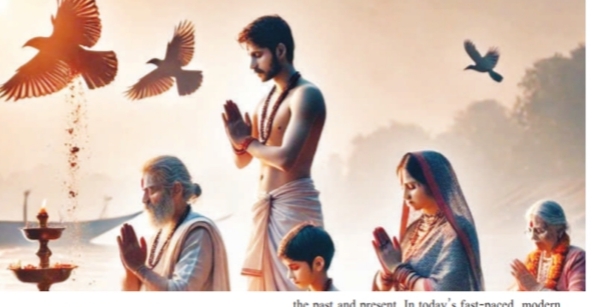
In Indian culture, ancestors hold a place even higher than deities. Our scriptures proclaim, Matrudevo Bhava, Pitrudevo Bhava,’ meaning parents and ancestors are divine, and a family, lineage, or society cannot be conceived without them. This is why Indian tradition dedicates a specific period to honoring ancestors, known as Pitru Paksha, which spans from Bhadrapada Purnima to Ashwin Amavasya. The final day of this period is called Sarva Pitru Amavasya. This day is not just a date but a festival of reverence and gratitude. On this day, ancestors whose death anniversaries are unknown or whose rituals could not be performed during Pitru Paksha for any reason are remembered and honored through Shraddha. This makes it the final opportunity to appease ancestors.
Sarva Pitru Amavasya falls on September 21. The Amavasya tithi begins at 12:17 AM on September 20 and ends at 1:24 AM on September 22, providing a full day for performing Shraddha, Tarpan, and Pind Duan. This day holds profound significance, especially for families who lack precise information about their ancestors death dates or were unable to perform Shraddha on the designated days. According to religious beliefs, remembering ancestors and offering them water, food, and Pind satisfies their souls, granting peace and blessings to their descendants. When ancestors are pleased, families experience prosperity, happiness in progeny, harmony in marital life, and progress. Conversely, neglecting or displeasing ancestors can lead to Pitru Dosha, causing financial crises, childlessness, marital discord, frequent illnesses, and obstacles in life.
Shraddha and Tarpan performed on Sarva Pitru Amavasya are fruitful only when done with devotion and purity. This involves bathing, wearing clean clothes, taking a resolve in the name of ancestors, and using items like kusha grass, sesame seeds,
Quote: In Indian culture, ancestors are revered even above deities. Our scriptures state, ‘Matrudevo Bhava, Pitrudevo Bhava,’ meaning parents and ancestors are divine.
water, milk, ghee, rice, and flowers. Pind Daan is performed at a sacred and clean location. After the Shraddha ritual, feeding Brahmins and donating food or clothes is essential. Traditionally, a portion of the Shraddha is offered to crows, cows, and dogs, as crows are considered symbols of ancestors. This day is also highly effective for mitigating Pitru Dosha. Recommended practices include performing Tarpan in sacred rivers like the Ganges, feeding the needy and orphans, donating clothes to the poor, feeding cows fruits or fodder, planting and regularly worshipping a Tulsi plant, conducting Havan and chanting mantras for ancestral peace, and offering grains to birds. These actions are believed to pacify Pitru Dosha and ensure the continued blessings of ancestors.
The significance of Sarva Pitru Amavasya extends beyond religion to social and spiritual realms. It reminds us that our existence is rooted in our ancestors sacrifices, hard work, and values, which form the foundation of our lives. When families gather to remember their ancestors, it fosters unity and preserves traditions. Sociologists believe that Shraddha is not just a religious practice but a social event that bridges
the past and present. In today’s fast-paced, modern lifestyle, the younger generation is drifting away from traditions, often viewing Shraddha and Tarpan as mere rituals. However, a deeper understanding reveals that this is not just a religious duty but a celebration of gratitude. In an era where society feels a lack of gratitude and human values, this festival teaches the importance of remembering, honoring, and following the path laid by our ancestors. It also conveys a powerful message to connect children with traditions and teach them that the roots of their lineage are their true strength.
On Sarva Pitru Amavasya, followers of Hindu traditions honor all their ancestors through worship, rituals, and charity. This day is dedicated to all departed souls. It is believed that Lord Vishnu permits these souls to visit the earth on this day. Performing Shraddha and Tarpan is considered highly auspicious. For those unable to perform Shraddha on their ancestors death anniversaries, unaware of the exact dates, or unable to conduct rituals properly during Pitru Paksha, this day offers an opportunity to perform Shraddha for all ancestors. Even if a full Shraddha or Tarpan cannot be performed, donating food or offering charity in the name of ancestors with devotion is highly beneficial. Offering or donating rice and black sesame seeds is also considered auspicious. From a
scientific perspective, the significance of Pitru Paksha is acknowledged. Scholars believe that the time of Amavasya is a special period for the flow of spiritual energy. When descendants remember their ancestors with devotion, positive energy is generated, benefiting both family and society. This is why fasting, charity, and self-discipline are emphasized during Pitru Paksha.